
Corporate travel in 2026 has been nothing but uncertain. Within the past year alone, business travellers across Asia have been caught in three very different kinds of crisis: airports in Jakarta closing for days after Mount Anak Krakatau erupted, airspace across the Middle East shutting down when conflict broke out between Iran, Israel and the United States, and typhoons repeatedly grounding flights across Japan and the wider region. Each event stranded travellers, disrupted meetings, and forced companies to make fast decisions with incomplete information.

These are not one-off events. Natural disasters, geopolitical conflict, and extreme weather are now recurring features of the global travel landscape, not rare exceptions to plan around once. For employers, the real test is whether they can identify affected travellers, reach them, approve an alternative and control the cost before a disruption escalates.
Corporate travel risk management gives companies a defined way to assess a trip, support an employee during disruption and authorise changes while maintaining control of spend.
Establish a clear corporate duty of care framework
Duty of care remains the foundation of any responsible corporate travel programme. Many organisations still treat duty of care as a policy requirement rather than an operational system. We can help ensure that organisations’ travel policies provide clear, actionable guidance on employee safety and risk management.
A robust duty of care framework should include:
- Up-to-date corporate travel safety policies
- Pre-trip risk assessment procedures
- Guidelines for travel to higher risk destinations
- Access to verified travel advisories
- Defined escalation and emergency response protocols
The duty of care policy should also specify who identifies affected employees, who contacts them, who approves a change of route and what happens outside office hours. With clear instructions and an accountable process for making and recording urgent decisions, employees gain an understanding of the safety measures in place and travel with greater confidence
Conduct comprehensive pre-trip risk assessments
Before approving business travel, companies should evaluate the risks associated with the destination and the routes, including transit hubs. A structured pre-trip assessment helps organisations anticipate disruptions and prepare travellers appropriately. Record the decision: proceed as planned, proceed with safeguards, reroute, postpone or cancel.
Risk assessments typically consider:
- Current geopolitical developments
- Extreme weather or climate-related disruptions, including typhoon season across East and Southeast Asia
- Volcanic activity and airspace advisories, particularly for travel across Indonesia
- Airline operational reliability
- Entry requirements and transit restrictions
- Local infrastructure, health, or security concerns
Before approving business travel, companies should assess the risks at the destination and along the route, including transit hubs. Record the decision: proceed as planned, proceed with safeguards, reroute, postpone or cancel. Assign an owner to revisit it whenever a material weather, security, airspace or entry alert affects the itinerary. Acting before departure, not after a disruption, protects both travellers and the business.
Case in point: Three disruptions, three lessons
Volcanic ash in Indonesia. In September 2026, the eruption of Mount Anak Krakatau led authorities to suspend operations at Jakarta’s Soekarno-Hatta International Airport and several other airports over multiple days. The disruption affected more than 340,000 travellers and approximately 2,900 flights before the airports reopened. Airlines rerouted and cancelled services as conditions were reassessed in real time.
Conflict in the Middle East. Following the escalation of conflict between Iran, Israel and the United States in early 2026, multiple countries including the UAE, Qatar, Bahrain, and Israel closed their airspace entirely, disrupting major connecting hubs such as Dubai, Doha, and Abu Dhabi that many Asia-Europe routes rely on. Industry sources described it as one of the most significant disruptions to Middle East business travel since the Covid-19 pandemic.
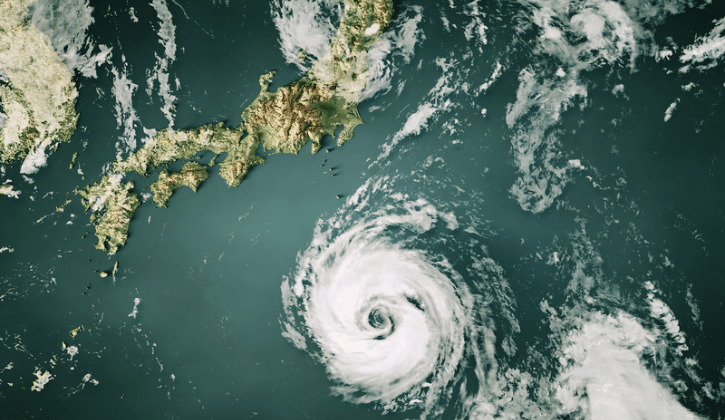
Typhoon season in East Asia. In September 2026, Typhoon Dujuan forced airlines to cancel hundreds of flights at Tokyo’s Haneda and Narita airports as the storm approached during Japan’s Silver Week holiday period, with more than 1.6 million residents across the capital region urged to evacuate. It followed Tropical Storm Jangmi in June 2026, which had already disrupted more than 5,600 flights across six Asian countries in a single event.
The three events exposed different gaps: volcanic ash can close an airport, conflict can remove a connecting hub, and a typhoon can change conditions shortly before departure. A company needs to know which employees are affected, what alternatives are available and who can approve the additional cost. They illustrate why pre-trip risk assessment should extend beyond routine checks to include destination-specific hazards, and why flexible booking terms and a responsive travel partner matter more than a lower headline fare when disruption actually occurs.
Addressing travel risks in business continuity planning
Travel disruptions have direct consequences for business performance. Missed meetings, delayed negotiations and stranded employees can hold up revenue and raise operational costs. Each of the events above showed how quickly flight schedules across multiple carriers can be affected, with knock-on effects for onward connections and business commitments. When a traveller cannot reach a critical engagement, the business owner must decide whether to send a backup attendee, meet remotely, reschedule or pay for an alternative route.
A comprehensive Business Continuity Plan (BCP) should cover travel-related risks as part of broader organisational risk management. It should set out what happens when a traveller cannot reach a critical engagement, whether the cause is a minor delay or an extended airport or airspace closure. It should name who makes that decision, how they reach the traveller and which additional costs they can authorise.
Key considerations include:
- Alternate travel routes or transport options
- Backup personnel who can attend meetings if a traveller is delayed
- Communication protocols for informing stakeholders
- Contingency plans for cancellations or itinerary changes
- Access to 24-hour travel support and emergency assistance
When travel planning is aligned with corporate continuity strategies, companies can maintain productivity even during unexpected disruptions.
Prioritise real-time information and rapid response
In a fast-changing travel environment, timely information can significantly improve traveller safety. Travel alerts are useful when they can be matched to affected itineraries and sent to someone authorised to act. Holiday Tours’ team monitors official alerts, such as from Indonesia’s Center for Volcanology and Geological Disaster Mitigation (PVMBG), regional weather warnings and government advisories. When one affects a route, we identify affected bookings by destination and travel date, contacts each traveller and the client’s travel contact, and presents rebooking options for approval.
Effective travel risk management includes:
- Real-time flight alerts and travel notifications
- Monitoring of global travel developments, including volcanic activity, typhoon tracking, and geopolitical risk across Asia
- Internal escalation procedures for urgent situations
- Clear communication channels between travellers and travel managers
Equip employees with practical travel safety tools
Prepared travellers are more confident and resilient when facing disruptions. Before departure, employees should know how to report that they are safe, whom to contact for an urgent itinerary change and where to find emergency assistance details.
Essential travel safety tools include:
- Digital copies of passports and travel documents
- Destination safety briefings, including relevant regional hazard advisories
- Emergency contact lists
- Cybersecurity guidance for using public networks
- Secure communication platforms
- Comprehensive travel insurance, including medical, evacuation, and trip disruption coverage

Implement flexible corporate travel policies
Rigid travel policies can increase risk when employees feel pressured to stick to fixed itineraries despite changing circumstances. Flexible policies let travellers put safety first without waiting for approval, which matters most when a disruption can escalate with little notice. A disruption policy should state when an employee may change a booking immediately, who approves additional spend and how the change is recorded afterwards.
Companies should consider:
- Airfares with flexible change or cancellation options
- Hotels with favourable cancellation terms
- Travel schedules that include buffer time between meetings
- Clear approval pathways for itinerary adjustments
For trips with a higher risk of disruption, compare a cheaper restricted fare with change fees, replacement fares, extra hotel nights and the cost of a missed business engagement.
Partner with an experienced travel management company
Holiday Tours has supported Malaysian organisations with corporate travel management for more than 50 years, and our partnership with BCD Travel, which operates in over 170 countries and territories, extends that local expertise into international network coverage.
Supported by more than five decades of experience in the travel management industry, Holiday Tours plays an important role in strengthening corporate travel risk management for Malaysian businesses. During complex disruptions, our experienced team of travel advisors at Holiday Tours can provide continuous, hands-on support, actively assisting with rerouting, rebooking options, and travel decision-making based on the latest information available.
Through structured travel governance and advisory support, companies can benefit from:
- 24-hour traveller assistance
- Monitoring of global travel conditions, including geopolitical developments, airspace restrictions, and volcanic and severe weather activity
- Expert rebooking and rerouting support
- Visibility of traveller locations during incidents
- Access to verified travel vendors
We work closely with corporate clients to integrate these capabilities into broader travel governance strategies, ensuring organisations maintain both oversight and support for their travelling workforce.
Frequently asked questions
- What is corporate duty of care in business travel?
Duty of care refers to an organisation’s obligation to protect employees while they travel for work, covering everything from pre-trip risk assessments to real-time monitoring and emergency support during disruptions such as extreme weather, geopolitical unrest, or airspace closures.
- How can businesses respond quickly when a destination becomes disrupted mid-trip?
Companies should have real-time monitoring, clear escalation protocols, and a travel partner who can rebook or reroute employees at short notice. The 2026 events in Indonesia, the Middle East, and Japan’s typhoon season each showed how quickly conditions can change and why rapid response capability matters.
- How often should travel risk assessments be updated for frequently visited destinations?
Risk assessments should be reviewed before trip approval and again when a material alert, itinerary change or incident affects the intended route or destination, not only at the point of booking. Regional risks vary by destination. Indonesia’s position on the Pacific Ring of Fire, the Middle East’s exposure to geopolitical conflict, and East Asia’s typhoon season are each standing considerations for organisations travelling to those regions.
- What kinds of regional risks affect business travel in Asia specifically?
Alongside standard risks like health and infrastructure, the region carries recurring hazards including volcanic activity in Indonesia, typhoon season across East and Southeast Asia, and periodic airspace disruption linked to geopolitical conflict in neighbouring regions.
Building a safer corporate travel programme
In today’s evolving travel environment, a well-managed travel programme is not simply about logistics. It is about safeguarding people, protecting productivity, and enabling business to move forward with confidence. If a company cannot identify affected travellers, reach them and authorise an alternative promptly, its travel policy is not yet an effective disruption plan. By implementing clear duty of care policies, conducting thorough risk assessments that account for regional hazards, integrating travel into business continuity planning, and partnering with us, businesses can protect their employees while ensuring operations continue smoothly.
START BUILDING A SECURE TRAVEL PROGRAMME TODAY FOR YOUR EMPLOYEES. REACH OUT TO US AT +603 2303 9100 (PRESS 3) OR [email protected]
You may also be interested in: